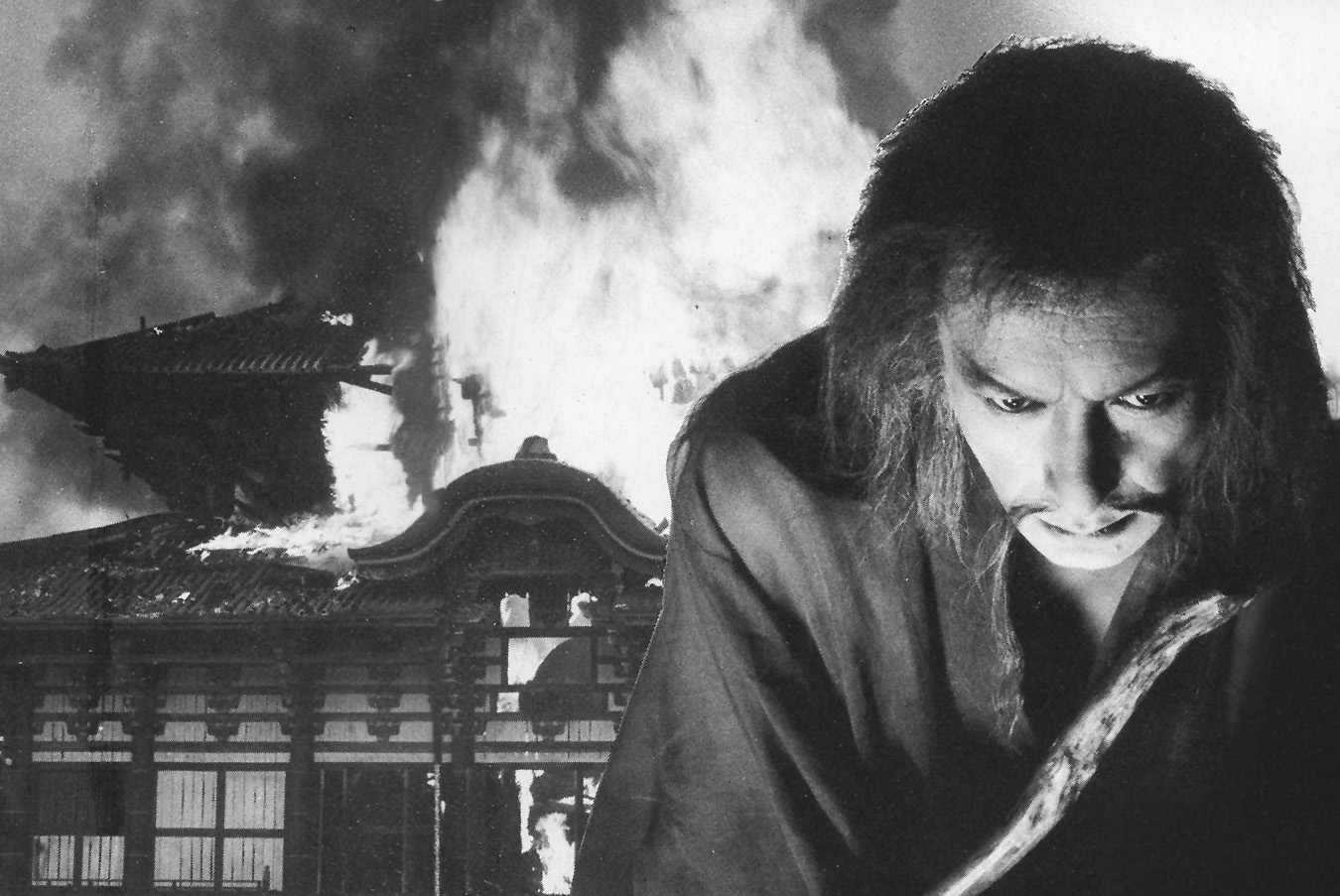
Two labels — Umbrella and Toy Robot — give us great options on BluRay of one of the weirdest ninja movies ever…
Long before Ringu, The Last Samurai or the Shogun remake, Hiroyuki Sanada (then ‘Henry’ or ‘Duke’ Sanada) became an 80s icon to millions in the West with cable/video store staples like Legend of the Eight Samurai, Shogun’s Ninja, and the surreal epic NINJA WARS. Originally Iga Ninpocho, this staple of video rental stores and cable movie channels was retitled to nibble off Star Wars, apropos as there are lasers… karate lasers.
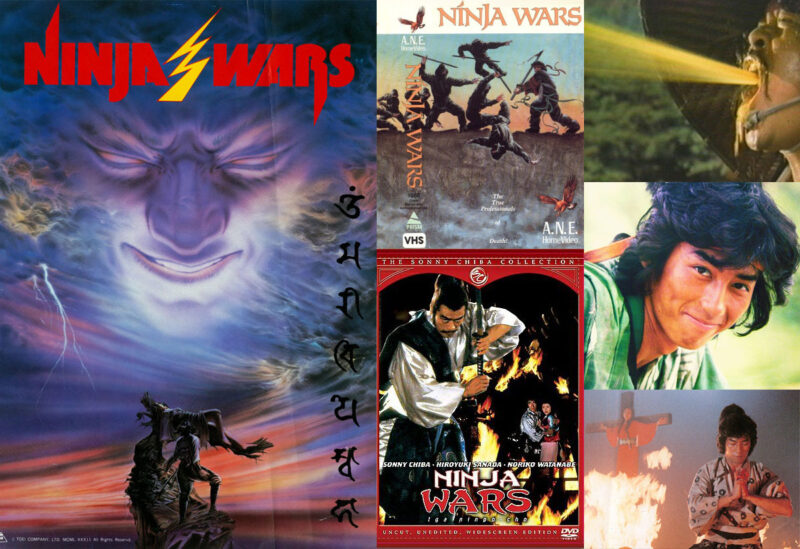
In a tale as demented as it is convoluted, an evil sorcerer manipulates a warlord with a magic teapot, aphrodisiacs and decapitated women with their heads re-attached to each others’ bodies. Then there’s a gang of devil monks, each with a surreal super-power, and Sonny Chiba pimped-out in black kabuki finery. Real historical events flow seamlessly into acid trips to stormy other-realms and Japanese Hell, pop-star heroines get burned at the cross, possessed warrior clerics kill everybody, giant Buddhas go up in flames (a record-breaking piece of practical filmmaking that was a big deal in Japan at the time), our hero doesn’t know which head-swapped identical twin sister he’s in love with, and… yeah I’ve seen this movie dozens of times over and I still don’t know what’s going on.
Ninja Wars came about from a collision of two different efforts — distributor Toei’s willingness to put enormous sums of money behind a large scale effort to bring a new golden age of jidai-geki to the 1980s, and producer Haruki Kadowkawa‘s Star Wars-driven infatuation with big colorful sci-fi and fantasy, lasers seemingly requisite. These two waves crashed over an already twisted novel by Futaro Yamada, leaving behind a wonderland of anime-like action, gratuitous nudity, surreal hellscapes and Sonny Chiba mugging the camera. And yes, young ninja in love chopping down trees with laser karate.
When this hit rental VHS, in an epic clamshell that promised ninja by the dozens, we were giddy — this was a JAPANESE ninja movie after all, so it’ll be like ten times better than Revenge of the Ninja, right? Two hours later, we all had sore necks from turning our heads sideways like confused German shepherds. American audiences had been trained to expect black suits and hoods and martial arts commandos, but this LSD trip of a movie had maybe 2-3 brief instances of such, tops. We just didn’t have the proper shinobi vocabulary to understand our non-hooded hero’s ninja training, or the villain’s mastery of classical ninjutsu black magic — a gimmick dating back before kabuki theater. The bad dubbing over a plot that would confound even a native Japanese audience already familiar with the material certainly didn’t help.
The original pre-production teaser above, and full Japanese trailer below.
Fortunately, there was enough eye candy, Japan Action Club stuntwork, naked ninja ladies, and giant pro wrestlers as sadistic monks to keep us distracted, and cement this genuinely bizarre film as a true cult classic. My little circle of teenage shinobi-files did imitations of Mikio Narita‘s evil wizard Kashin Koji (or at least his English dub voice actor) for years, and his ace hench-woman Rasetsu uses a unique serrated-edge sickle that is one of my absolute favorite ninja weapons ever.
Back in the days when cable channels put half-hour trailer packages together for the coming month’s titles, HBO took a break from airing Beastmaster long enough to preview Ninja Wars. The narration focused on the action and put it in the same silo as Cannon’s ninja fare. Months later when re-running the film, they used different footage and dulcet tones to re-position it as more of an exotic foreign art film. Subsequent home releases tended to have the same wandering attitude, no one ever fully knew what to do with this thing. Then it somehow entered a weird semi-public domain status, ending up on budget VHS, late-night cable shows, and eventually cheap DVD sets from the likes of Mill Creek in the early 2000s. It’s gotten proper un-cut releases in the original language since, and continues to enjoy nostalgic reverence for how damn strange it was and how it pushed the narrow envelope of what American fans in particular considered ‘ninja.’
Today, thanks to two concurrent boutique label Blu-Rays, new fans can first experience the magnificence of a young Hiroyuki Sanada’s shredded physique, massive hair and FX-laden martial arts and stuntwork. Your mileage will vary with the sappy soft-rock love ballads and sometimes porn-adjacent schmaltzy jazz score (see also Shogun’s Ninja, also new on Blu), but to me it all adds to the psychotronic experience. I’d be remiss to not offer a trigger warning for a lot of rape and violence against women this film relies upon.
With all that in mind, the two current Blu releases offer something for everyone, let’s take a look at each. FULL DISCLOSURE: the folks at Umbrella sent me their limited edition disc all the way from Australia, and with current shipping rates I’m grateful. I purchased the Toy Robot release locally.
UMBRELLA
Australian label Umbrella was first to announce the acquisition of Ninja Wars, the first official disc of this since the break-through DVD from Adness in 2005. Their print is derived from a painstaking remaster in partnership with original producers Kadokawa, and will likely become the definitive edition of the film out there. The film has never looked better, it’s absolutely gorgeous, and sounds great too. They’ve surrounded this effort with some deluxe trimmings, in two editions.
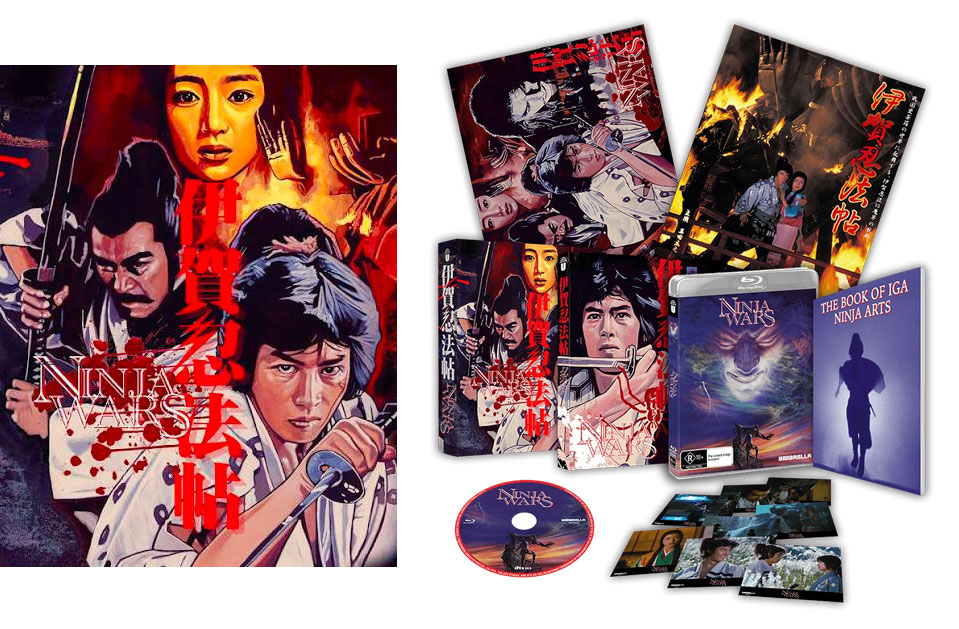
Available exclusively from the label’s direct online shop, the Collector’s Edition is a sturdy slip-cased package containing the disc in a slipcover illustrated by Japanese artist Poochamin. The disc case itself has reversible artwork also featuring the vintage poster art from 1982. A 48-page companion book features a translation of the original studio press book and dozens of photos, a new essay by the awesome choreographer/director/producer Koichi Sakamoto — of the likes of Kamen Rider and the recent ninja actioner Black Fox, and another piece on the film and the general ninja idiom from Midnight Eye co-founder Jasper Sharp.
You also get eight single-sided photo cards, which are dark and sub-par printed to be honest, but a two-sided folded wall poster of both new and vintage imagery makes up for that. For some reason my copy was packed with a set of postcard-sized lobby card reproductions from an unrelated film called Long Weekend. Don’t know if that was a factory error or a cross-sell notion, but it adds some unnecessary bulk to it all.
This loaded limited edition retails for $55, but a regular edition sans the extra printed matter and casing is available in the $30 ballpark. The disc is the same on both editions.
Great extras on the disc itself — we get enthusiastic commentary by the duo of Mike Leeder and Russell Wait. Despite wandering away from the actual film’s content often, it’s a good conversational track with lots of genre history, Sanada biography, spotlight on the ninjutsu black magic aspects of the ninja idiom, and generally delivers a welcomed context of films like this belonging in the larger picture of martial arts genre cinema and fandom.
There are two new video features — Jonathan Clements brings his authoritative prowess to “Blood Stained Ninja Scrolls” — essentially ‘Ninja Wars 101’ in short form, discussing the history of the film, its revolutionary synergistic creation and controversial release in Japan. “Chiba Law” features a world-spanning panel of film commentators and industry professionals discussing Sonny Chiba, the Japan Action Club, martial arts in cinema, etc. A couple of trailers round it all out.
The $55 price tag is reasonable in an era when single film deluxe releases are over $100, and there’s been plenty of effort put into both the restoration and overall package here to consider this a bargain even. I find the booklet and the poster worthy of paying $20 more than the standard, and directly supporting the label is always the way to go if you can swing it. Shipping from down under can be punitive depending on where you are, but the label offers discounts.
Plenty of sellers in the US and Europe are importing the regular edition, DiabolikDVD and the like, so shop around. You won’t be disappointed. Umbrella’s Collector’s Edition is the best package for those building libraries, the steel-book collector types and those wanting a treatment of a foreign film in more respectable, even academic aires, not the cheap exploitation swamp this film has been stuck in for decades. Well done!
Buy direct from the label here.
TOY ROBOT
The new Los Angeles-based imprint of the always superb Arrow Video is coming out of the gate with a shotgun blast of much-welcomed multi-genre releases. They’ve got some nifty branding, and I really dig all their discs having a vertical obi band taking the packaging up a notch. We’re going to get some great stuff from these folks…
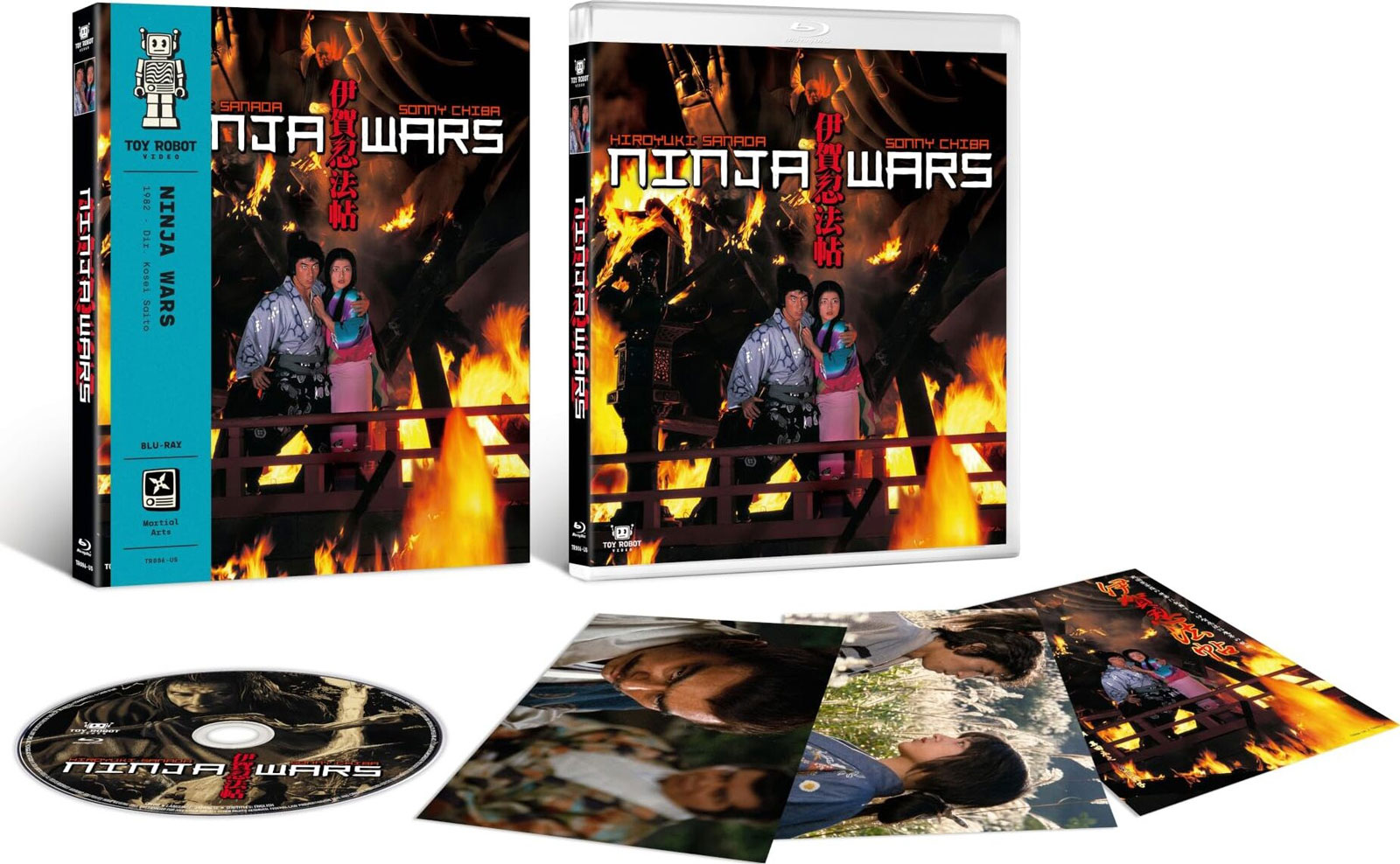
Here, we get a straight transfer of what was provided them from Toei Studios, which is a 2022 remastering done by the same folks who did the above Umbrella effort. Whether or not their’s is the same remastering but enhanced in post on the label’s end is unclear to me, but regardless, the Umbrella picture seems somewhat better. There’s nothing distinctly wrong with the Toy Robot presentation, it’s better than any DVD and without both to compare directly you’re not missing anything owning this.
The real strength here are the on-disc extras. Johnathan Clements is also part of this package, this time doing the audio commentary, and it is just deep and rich, you basically have a graduate degree in Ninja Wars after watching this.
Two interview-style new features provide an additional wealth of context and information. In “A Japanese Ninja” go-to Japanese pop culture authority and author of Ninja Attack Matt Alt gives an excellent overview of the subject, also touching on the history of ninja, the history of ninja folklore, and history of ninja media exploitation and more. Absolutely great. A second featurette, “The Way of the Ninja” with Japanese academic Daisuke Miyao provides genuinely valuable perspective from someone who was a Japanese teen seeing this on broadcast TV before going on to become a leading authority on Japanese cinema. I highly recommend his book The Aesthetics of Shadow: Lighting and Japanese Cinema.
There’s also a remarkably in-depth text essay from renown translator and Japanese folklore expert Zack Davisson called “Dark Magic Fantasy of Ninja Sword and Sorcery” — if I have one complaint here would have been way better if presented as a booklet insert. This piece is too good to be easily missed in the DVD menu or passed over by those not wanting to read on screen.
I’m appreciative of a second cut of the film here too, the “VHS Edition” which is a straight bump from a beater rental tape and exactly how most of us first experienced this film — full-frame, tracking issues galore, and a trimmed-down edit that makes the editorial even more incomprehensible. The English dub track is something my circle of martial arts movie fanatics quoted endlessly for decades, and I love having this bastardized version just for the nostalgia and historical reference.
Great job on this Toy Robot people, you’ve come out swinging and I’m looking forward to great things.
Buy direct from the label here.
IN CONCLUSION
My time is at a premium right now, and I was already late getting this out, so I haven’t been able to dissect each cut of this film to the fullest. I can’t comment on which has a better translation or compare the runnings times to the precise second citing where variances lie. I don’t hook decks up to wave-form monitors and compare the scientific compression data, nor do I have a hundred inch mega plasma TV or ten grand worth of home speakers to compare the two with. So my verdict here comes as one of you all…
Priced less, Toy Robot’s disc is going to be more entry-level/casual friendly, and it has better video extras. I’m claiming no expertise and my TV is for shit to be honest, but to my eye the Umbrella picture is superior, and I’m super appreciative of the extra effort of the packaging, and hiring an actual Japanese artist for the embellishment. Their Collector’s Edition is worthy of space next to Radiance’s Shinobi box sets for you deluxe library builders.
In this economy, however, I fully understand the reality of not shelling out for both, but honestly… that’s my recommendation. Both releases have a lot of merit, and I pretty much need each of them on my shelf. It’s maddening, because a single package of Umbrella’s remaster with Toy Robot’s commentary and video extras, but in Umbrella’s packaging with their book but with Toy Robot’s text essay added to it and the VHS rip as an extra… THAT would be the ideal solution.
So yeah, I guess I’m no help here if you have to choose one over the other, cuz I chose BOTH. Whichever you go with, just keep buying physical media and rewarding the labels exposing vintage ninja movies to new and familiar audiences alike.
Keith J. Rainville — October 2026