





(originally published June 2010)
Meiko Kaiji in ninja gear? Swoon!
Found these caps years ago in a sadly defunct blog (German if memory serves?), but they also floated around various newsboards for a while. The Female Convict Scorpion and Wandering Ginza Butterfly star had a stint on the long-running Oedo Sosamo TV series, and man did those expressive eyes ever work in a hood! Wow…


For the unfamiliar – and as a lover of 70′s and 80′s Japanese action TV I HIGHLY recommend you become familiar - the Oedo Sosamo / Onmitsu Doshin property spans around 18 years of prime-time TV, TV specials and theatrical releases. Think of it like a chambara version of The Untouchables or even The Mod Squad, with a who’s-who of genre stars filling in roles of shadow-skilled secret police patrolling feudal Edo. Kaji was just one of many kunoichi cuties and blade-weilding honeys featured.


The female’s role in the team would always be disguised info gatherer and undercover intelligence, but when the gloves came off, they’d have short sword in hand ready to throw down.


Needless to say, if a female villain ever showed up, it was the kunoichi’s job to take her out. You don’t want your handsome leading men cutting women in half, no matter how much they might deserve it.


Read more on the gorgeous and enigmatic Kaji at Cult Sirens.
Tags: Meiko Kaji
(originally published July 2010)

There may not be a more beautifully shot ninja film than the 1964 artistic gem Kaze no Bushi (aka “Warrior of the Wind”). The set-bound cinematography is great, the use of natural light in the lush exteriors approaches astounding, there are fights that look like nothing else in the genre, even the blood is gorgeous.

Two years after holding his own against genre heavyweights in Akai Kageboshi, Hashizo Okawa returns to the ninja fold as one of the most human protagonists to ever dawn the hood. It is difficult to describe his journey from complacent layabout to reluctant hero and beyond without giving away too many spoilers, so I’ll try not to ruin anyone’s pleasure at discovering this film. Suffice to say his portrayal of bored womanizer Shinzo goes places emotionally you won’t expect.

The under-achieving Shinzo is constantly beset by women with different agendas, from a shifty kunoichi to a noble princess with a secret. Women are the primary catalysts in his development as a hero, and get him into all sorts of trouble.

And a brutal ninja spy as a rival doesn’t help matter either.

Shinzo is a shadow-skilled agent himself, but the tactical mindset and task-driven disciplines of a ninja fail when it comes to matters of the heart.


Kaze no Bushi was directed by Tai Kato, known for his Toei yakuza films. He certainly didn’t approach this ninja film with the typical genre slant. The conventions of shinobi cinema are present, but not leaned on or hidden behind. There’s some experimenting here (most of which works, although when it doesn’t it really doesn’t), and for every typical creep down a hallway there’s a scene you won’t see in any other ninja movie.


Kato didn’t seem especially interested in night scenes, which would be a problem in any other ninja movie. These superbly shot exteriors and multi-depth set pieces are so well executed, you just don’t miss the typical ninja environs.

The high-point of Kaze no Bushi is this unforgettable (although brief) fight and flight scene amidst a maze of rocks on a beach at dusk. Subdued orange light, wide open spaces contrasting with a scurrying, tight pursuit amid jagged terrain, it’s absolutely beautiful. I can’t think of another ninja action scene this damn pretty.


I love this style of head wrap. Its as common as the ‘stingray’ style hood and other oft-seen mask styles, but in this grey tone, you can really see the technique.

As unique and masterful as Kato was here, his best accomplishment in Kaze is what he does with his lead man. Shinzo is perhaps the most human and emotionally credible hero of a ninja film I’ve ever seen. He has flaws, feels rage, shame, hurts from losses. He’s in a situation way over his head and way beyond his years of experience, and knows it. Multiple times he can take an easier path, but doesn’t. He’s a different guy by film’s end, and that’s what a good movie needs to do to it’s main. The human factor here is great.

Kaze no Bushi is on an artistic level above the genre in many ways, as unique as Samurai Spy and every bit as visually striking. It’s not an action powerhouse like Mission Iron Castle or a fun exploitive flick from the Chiba era. Kaze is more of a lush painting.
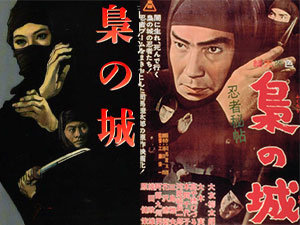
This is an adaptation of an original novel by Ryotaro Shiba, also responsible for Castle of Owls (another half-decent ninja film, if I recall). Curious to know if the superb ninja films live up to his written words, or if there was a generation of Japanese reader who rolled their eyes at these movies like we often do here.
Tags: Hashizo Okawa, KAZE NO BUSHI


Not a problem. Last post was specific to the Kosugi doubling images, but here’s the remainder of the French lobby pics from Enter the Ninja.

Don’t know about you cats, but I was totally in love with Susan ‘Dirty Mary’ George.What a career for her!

Not that Franco ‘Django’ Nero‘s prolific career has been anything to sneeze at. But let’s face it, he was no Mike Stone when it came to the action scenes here…


Israeli actor Zachi Noy was absolutely great as The Hook, too.

Tags: Enter the Ninja, Franco Nero, Sho Kosugi, Susan George, Zachi Noy
These French-language market lobby photos for the 1981 release of Enter the Ninja are a bit different than the American marketing and press photos, mainly in that they reveal close-ups of Sho Kosugi doubling for one of the red ninja from the initial training battle sequence.

Kosugi next to what is likely Mike Stone in in the red ninja suits that would inspire Marvel Comics’ The Hand and myriad 80s action figures.

This is a great look at the interesting construction of the hoods.


Kosugi and Stone worked their asses off out in those Philippine woods, doubling in both star and soldier roles.
Tags: Enter the Ninja, Sho Kosugi

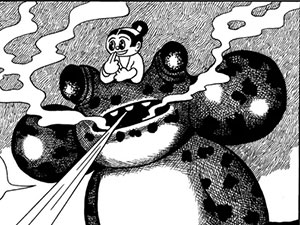
Shirato Sanpei‘s manga epic Ninja Bugeicho had dozens of characters, and hundreds more victims of these characters, too. Being a ninja comic, he could have gone the easy route and just hooded-up most of these people, lessening the burdens of both character design and repeat renderings.
Instead, he cranked out a huge load of distinct characters in a remarkably diverse variety of styles. From page-to-page and panel-to-panel, realism was mixed with cartoonishly absurd elements, minimalist blocky anatomies stared down more complex and elegantly organic aesthetics. Even the hoods had wide-ranging antics of their own.
Young vs. old, good vs. evil, warriors vs. laymen, samurai vs. serfs — the alterations of his style to set them apart sometimes made characters look imported from other artists’ books. But at the same time, it was all him and all worked in one ambitious graphic narrative.


Read up on Sanpei’s shinobi from a site that actually knows what it’s talking about, What is Manga.
Tags: Shirato Sanpei

For the past 15 years or more, Chinese toy company Chap Mei have been the absolute masters at cashing-in on current hot trends — from soldiers to pirates to dinosaurs, depending on what’s been in theaters. More than merely knock-offs, Chap Mei’s take on toys is EXTREME to the max. They take a normal idea (SWAT vs bank robbers, knights vs wizards) and redesign it while on acid and meth, with 80s exploitation movies and GWAR playing for inspiration. Two-headed zombie pirates, dwarven safari hunters with bionic stilts, cannibal cave-men, giant mummies, giant-er squids, war elephants with missiles and laser-laden pterodactyls — these guys have got serious balls when it comes to boys action toys.
Chap Mei’s two recent ninja lines — Ninja: Hero of the Dark and Ninja Curse — are extreme to say the least. Hero of the Dark has an assortment of figures that look like a post-apocalyptic street gang crossed with the Seven Samurai, but riding rocket skateboards, flying wings and helicopter mech suits. Ninja Curse has Mortal Kombat-esque ninja with snap-on parts that transform them into lizard monsters and werewolves.
And all those bat-shit crazy lines hold these un-assuming little Ninja Warrior guys as their origin.


Forget all that chrome armor, colorful capes and giant weapons, it’s the core figure I just adore. This 3.75″ hybrid as much to traditional 60′s Japanese shinobi costuming as it does to the 90s Power Ranger school of design. And with a Wolverine claw, can’t forget that.

The figure came in black and a much less desirable milky-white and gold design that hasn’t aged well color-wise.


Now, what I love more than the mix of traditional and futuristic elements is the subtle pose, and resulting attitude, the figure has. That slight head dip, the tense shoulders and curled arms — this guy’s at rest, but he’s a coiled spring ready to jump. One can almost imagine him breathing heavy, trying to check his rage at the presence of a rival or catching his breath having just killed an enemy.

Chap Mei’s sculptors and character designers are absolutely brilliant, part of why these cheap quasi-knock-offs have such a fervent fan base in the collector realm. This early figure was the first hint at the brilliance to come.

I’ll do a feature on Hero of the Dark at some point, but Ninja Curse figures are impossible to get in North America. Any overseas fans who can score these, I’m a buyer!

Meanwhile, JoMi Toys has nice features on all these lines.
Tags: Chap Mei

I was asked by the film review site SoReelFlix last month to contribute a Top 10 ninja films list.
After a month of notes I had about 30 bare essential films and realized an outright Top 10 wasn’t going to happen — I felt like a parent pushing kids out of a lifeboat or something…
But, what I was able to do was break the massive world- and decade-spanning genre down to 10 general categories of film experience, based on how they are enjoyed by the public, and pick an ideal ambassador of each. I feel in most cases they’re the best, or at least ideal entry points, into facets of ninja movies of which a lot of potential fans might not be totally aware.
I skipped outright kids’ movies (especially of the turtle variety) and soft porn (tastes and ‘needs’ of the audience vary too widely there!), but otherwise I think this is a pretty decent Top 10.
Thoughts???
10 Essential Ninja Movies from 10 Different Categories
Thanks to James from SoReelFlix.
Remember during the home video explosion how many low-end kung-fu movies got cheap new package art and “ninja”-centric re-titles? I got burned so many times at the video store by this, fuming when the 70′s ‘chop-sockey’ playing on my VHS not only had no ninja content, there weren’t even any vaguely ninja-esque hooded characters in there that might have been mis-identified by an honest mistake.
I thought those days were over, but lo-and-behold!

In a film marketing context, “Shinobification” — the giving of implied ninja-ness to something that has no actual shinobitude of its own — ranges from slightly fudging advertising or packaging to make minor ninja characters seem more important than they actually are, to outright bait-and-switch in the hopes some poor sucker’s ninja-fandom causes them to purchase what is essentially a ninja-less product.
The current release of Warriors of Virtue 2: The Return to Tao is decidedly the latter!

For the uninitiated, Warriors of Virtue was a somewhat notiorious 1997 martial fantasy flick co-produced by soon-to-be-broke American and Chinese partners. Trying to drag on the live-action Turtles flicks, it achieved what few thought was possible — uglier kangaroo suits than Tank Girl. Despite a lot of really good FX and stunt folk working their asses off on this thing (and Abe Sapien himself Doug Jones as one of the martial marsupials), it was an absolute catastrophe for the studios and toy licensers involved.

How a sequel got made is beyond me, but somehow five years later one did. Usually sequels to creature-suit driven movies are cranked out to re-use (and amortize) the appliances from the original, but in this case it’s explained to us the kangaroos have evolved into normal looking humans now, so even the core critter-ness of the first film is gone here. So you write-out the gimmick animals but keep the name of your disastrously under-performing initial film?
Return to Tao‘s release was marred by the sudden death of its villain star Kevin Smith, who played Ares on the Hercules and Xena TV shows. Maybe that’s why I had never even known of its existence until it hit Netflix streaming unceremoniously last year?
Then last week I’m in a Fry’s Electronics and WOW! Are you kidding me?

Quick checklist of things, besides kung-fu kangaroos, that are NOT in this movie:
1.) Ninja.
2.) Ninja-to.
3.) Shuriken.
4.) Any building from any era of Japan.
5.) $4.99 worth of quality martial arts.
They even do the cheesy trick of dropping the “2″ from the title so as not to initially discourage potential buyers who never saw (or heard of) the original, of which there are MANY.
Now, to be fair, there is ONE scene where a female character wears a ninja-lke-if-you-squint outfit, which foreign packaging properly exploits:

But this North American bargain-bin DVD release crosses the ninja-bait-and-swindle line. Don’t be fooled shinobi-cinema-files!
Besides, you can see in on Netflix for free…
Tags: Warriors of Virtue 2

One small… small… step above the generic 80′s rack figure would be this line of Remco and Norris Kommando compatible figures from the Lanard company. Dragon Force Ninja Dragonmaster figures came in at least three colors — black, white and red — and there was even a female version of at least the red scheme. Besides the ninja, Dragon Force also included Karate and Kung-Fu heroes.

I would give my left nut for that female figure…
In the realm of bargain and generic figures, the Lanard’s were actually pretty well put together, although lean on accessories. A single sword is all they had, no oversized shuriken or outre chain weapons here.


The ninja had two headsculpts with varying hair paint. The Norris-knock-offs just looked like bear-porn stars. Note the bare feet hastily painted over in place of properly sculpted tabi.

Tags: Dragon Force, Dragonmaster, Generic toys, Lanard, Remco

I’ve had this old beater copy of Zen Combat – Jay Gluck‘s ground-breaking 1962 treatise on Japanese martial arts – for years but never got around to cracking open its aging pages until recently. Finding a full chapter on ninja, written two decades before the craze, was a delightful surprise. It’s a very interesting read, for the information presented yes, but more for its warts-and-all attitude towards the then burgeoning Japanese ninja boom.

Zen Combat is a collection of new and re-purposed articles from late 50s/early 60s martial arts mags, which at the time were more like trade publications and newsletters for a community of professionals and ‘pro-sumers’ rather than the media-influenced glossy fare they became post Bruce Lee. Gluck was an Asian culture expert and practicing martial artist (travelling in circles with the great Mas Oyama) living part-time in Japan during a time when all things ninja were exploding in popularity. His poise is like that of an old-school Rolling Stones fan wading through a crowd of girls screaming for One Direction. The result is one of the more honest, if not overly skeptical essays on the matter you’ll find.
This article wasn’t a cover feature designed to sell magazine copies during a craze. There is no slant toward any emerging school, pressure from a publisher not to offend advertisers or effort to fan the flames of an exploding fad. For that, I think its a valuable read regardless if one agrees with Gluck’s findings.
The book is out of print, and the author no longer with us, so until Zen Combat becomes a commercial entity again, here’s scans of my vintage copy of the “The Magician: Ninjutsa” [sic] article. Have at it…


Gluck’s personal connection to shinobi history is little more than family anecdote, but the fish tales actually serve to illustrate a fundamental frustration with studying the moving target that is historical shadow arts and ancient espionage.


Gluck is a bit of a hater here, but aside from dispersions on “cockeyed karate” experts I really dig his analysis of “dirty weapons” and the practical truth behind alleged artifacts that populated the cases of the new wave of ninja museums and tourists attractions.


Interesting that despite looking down his nose at ninja-mania, Gluck isn’t a debunker. He buys into the black suit, and even makes parallels with kabuki stage blackout wear, but not a direct connection based on outright doubt as many have since.

Gluck also embraces the notions of specialized walks and runs as legit techniques of ninjutsu, seen in a lot of contemporary film and TV in “that man, he runs like a ninja” scenes. Check out Festival of Swordsmen or any of the Onmitsu Kensin (aka The Samurai) seasons for this.

I absolutely LOVE the line “People may look at him, but they will not see him,” which foreshadows similar notions Joseph Stefano wrote in “The Invisibles” episode of The Outer Limits two years later:
You do not know these men. You may have looked at them, but you did not see them. They are newspapers blowing down a gutter on a windy night.
and later,
You do not know these men. You may have looked at them, but you did not see them. They are the wind that blows newspapers down a gutter on a windy night — and sweeps the gutter clean.
Stephano’s prose served as the “control voice” narration at the beginning and end of an episode centered on secret government agents battling an even more secret alien invasion conspiracy. Their heroics will never be known to man, nor will the threat they defeated ever be realized by a public secure in its ignorance of what almost just went down.

The “control voice” lines could just as well describe the value of good ninja, whose genuine exploits are (perhaps to history’s benefit?) lost in the fog of family anecdotes, fish tales spun by fraudulent martial artists cashing in on fads and mass media whipping up a big craze. Or so Jay Gluck postulated…
I’d love to see what he would have written twenty years after the publication of Zen Combat. If Gluck was dubious of all the “last ninja” schools then, what would he have thought of what went down in the 80s?
Our fetishization of supposed “dirty weapons” certainly didn’t fade away, either.

Tags: Jay Gluck, Mas Oyama, vintage magazines, Zen Combat